
It is Important to Know When to Change Fluids and Filters of Your Mini Excavator
Keeping a mini excavator running at its best comes down to one habit more than any other: staying on top of fluid and filter changes. These small, scheduled tasks protect the heart of your machine, preserve
6/27/20267 min read
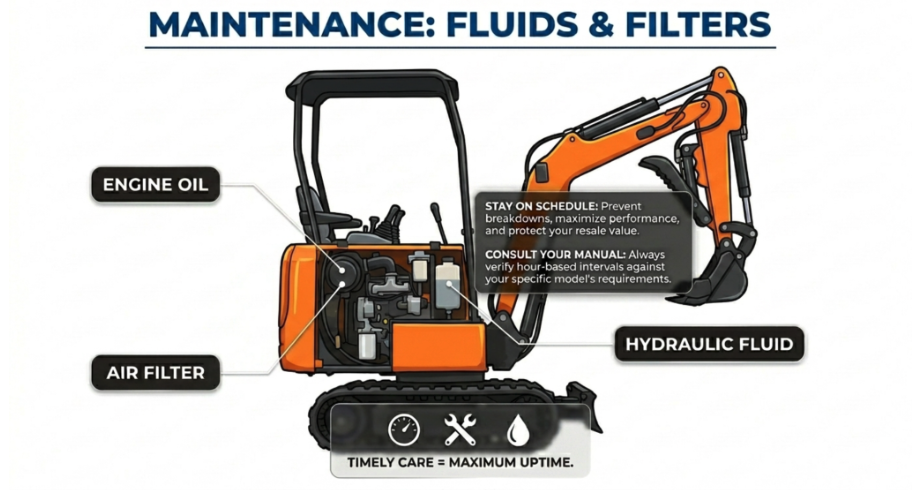
Keeping a mini excavator running at its best comes down to one habit more than any other: staying on top of fluid and filter changes. These small, scheduled tasks protect the heart of your machine, preserve its resale value, and keep expensive breakdowns off your job site. Timely maintenance maximizes performance, supports safe operation, and extends the working life of every component under the hood and inside the hydraulic system. While exact intervals vary by model, engine type, and how hard you push the machine, a few standard maintenance categories apply across nearly every mini excavator. The guidance below breaks down each major fluid and filter system, explains why it matters, and gives you reliable hour-based intervals to plan around. Always treat your manufacturer's manual as the final authority, then adjust your schedule based on how dusty, hot, or demanding your conditions tend to be.
Engine Oil and Filter
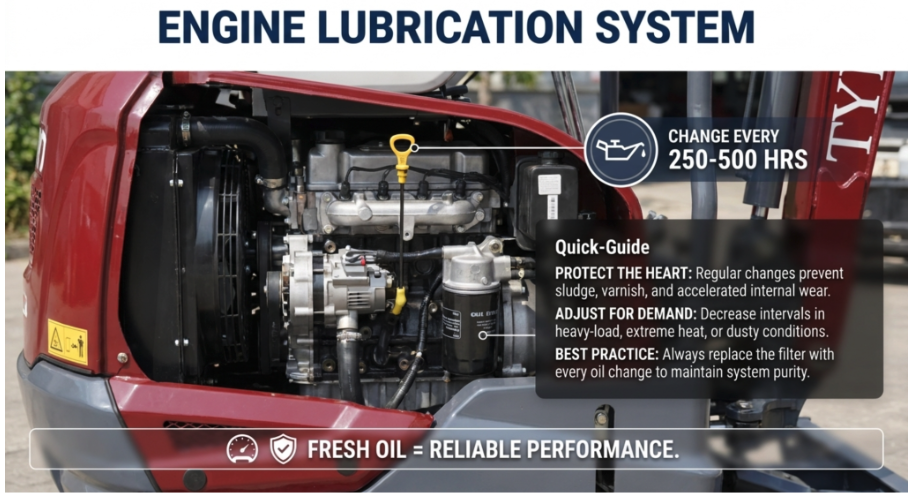
Engine oil is the lifeblood of your mini excavator, and changing it on schedule is the single most important thing you can do to protect the engine. As a general rule, plan to change your engine oil and filter every 250 to 500 operating hours, depending on what your manufacturer's manual specifies and how harsh your working environment is. Machines that run in heavy dust, extreme heat, or under constant heavy load sit at the lower end of that range, while lighter-duty use can stretch closer to the upper limit. Over time, engine oil collects combustion byproducts, fine metal particles, and moisture, all of which break down its protective qualities and lead to the buildup of sludge and varnish inside the engine.
Fresh oil and a new filter work together to keep the engine clean and well protected. The oil lubricates moving parts to reduce friction, while the filter traps contaminants before they circulate back through the system. When you neglect this interval, those contaminants accelerate internal wear on bearings, pistons, and the cylinder walls, which can shorten engine life dramatically and lead to costly repairs.
Keep these points in mind for engine oil and filter service:
Check the manual first for the exact interval and the correct oil grade for your engine.
Shorten the interval in dusty, hot, or high-load conditions where oil degrades faster.
Replace the filter with every oil change so fresh oil is not immediately contaminated.
Inspect oil color and level regularly between changes to catch problems early.
Staying disciplined here protects lubrication and cooling, two functions that keep your engine reliable for the long haul.
Hydraulic Fluid and Filters
Hydraulic fluid powers nearly everything that makes a mini excavator useful, from the boom and arm to the bucket and tracks. Because the hydraulic system operates under enormous pressure, keeping its fluid clean is critical to the machine's power, precision, and overall reliability. As a general guideline, hydraulic fluid should be changed every 1,000 to 2,000 operating hours, though hydraulic filters often need replacement well before that point. Filters do the heavy lifting of capturing tiny particles and debris that build up through normal operation, so swapping them on a more frequent schedule keeps the fluid cleaner for longer and protects the entire system.
Contaminated hydraulic fluid is one of the leading causes of premature component failure. Microscopic particles act like grit inside the system, scoring the precision surfaces of pumps, valves, and cylinders. Once these tightly toleranced parts wear, you lose lifting power, experience slower response, and risk internal leaks that are expensive to repair. Moisture and heat also degrade hydraulic fluid over time, breaking down the additives that protect against wear and corrosion.
When servicing the hydraulic system, focus on the following:
Replace hydraulic filters early and often, typically well ahead of the fluid change interval.
Use only the manufacturer-specified fluid to maintain correct viscosity and additive protection.
Keep the reservoir sealed and clean during service to prevent introducing new contaminants.
Watch for signs of trouble such as foaming, milky fluid, or sluggish hydraulic response.
Clean hydraulic fluid keeps your machine strong and accurate, so this system deserves consistent attention throughout its service life.
Fuel Filters
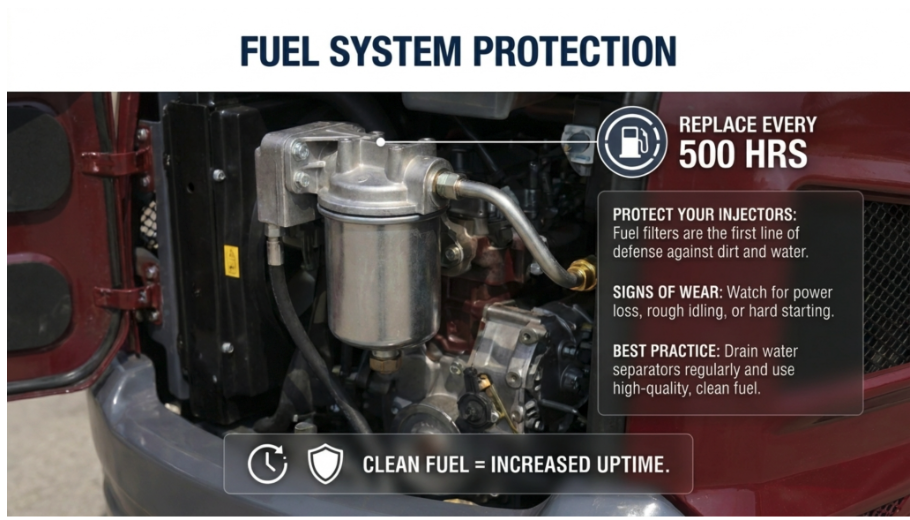
Fuel filters protect one of the most sensitive and expensive systems on your mini excavator: the fuel injection system. These filters capture dirt, water, and other impurities from your fuel supply before they can reach the injectors and pump. As a standard interval, plan to replace your fuel filters every 500 operating hours, and move to a more frequent schedule if you work in dusty conditions, store fuel for long periods, or notice any drop in engine performance. Modern diesel injection systems run at very high pressures with extremely tight tolerances, which means even small contaminants can cause serious and costly damage.
A clogged or neglected fuel filter creates problems that build gradually and then surprise you at the worst time. Restricted fuel flow starves the engine, leading to power loss, rough running, hard starting, and eventually stalling under load. Water that slips past a worn filter can corrode injection components and disrupt combustion. Replacing the filter on schedule keeps fuel flowing cleanly and protects the injection system from blockages and breakdowns.
Pay attention to these fuel filter practices:
Replace filters every 500 hours as a baseline, and sooner in dirty or dusty environments.
Drain water separators regularly to keep moisture out of the fuel system.
Use clean, quality fuel and store it properly to reduce contamination at the source.
Act on warning signs like loss of power, rough idle, or trouble starting.
Staying ahead of fuel filter changes is a low-cost habit that prevents some of the most disruptive and expensive failures a mini excavator can experience.
Air Cleaner/Filter Elements
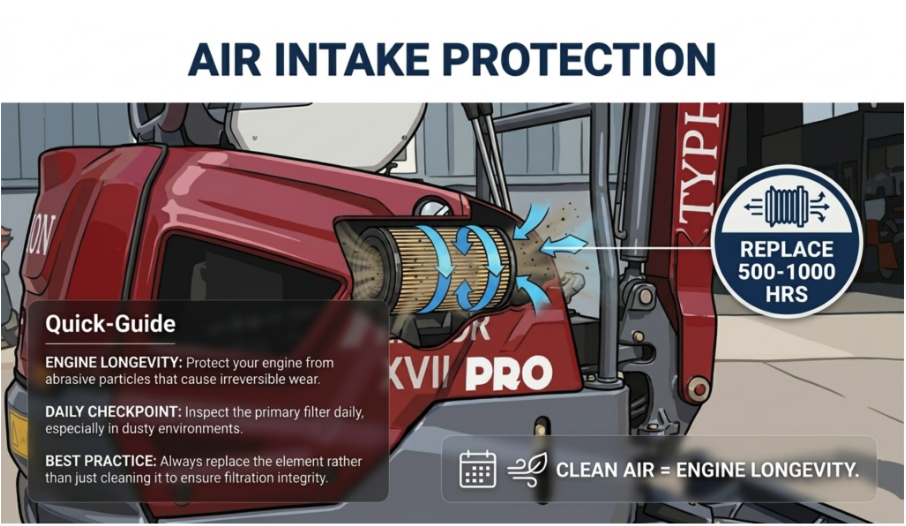
The air filtration system guards your engine against one of its greatest enemies: abrasive airborne particles. Every mini excavator engine draws in large volumes of air, and on a job site that air is often thick with dust and grit. The primary air filter should be inspected daily and replaced every 500 to 1,000 hours under normal conditions, though high-dust environments can demand far more frequent replacement. Because air filtration directly affects combustion, a neglected filter can lead to serious and even catastrophic engine damage.
A clogged air filter restricts airflow, which throws off the air-to-fuel ratio and forces the engine to work harder. This results in reduced power, higher fuel consumption, and excess soot and carbon buildup inside the combustion chamber. Worse, a damaged or improperly seated filter allows abrasive particles to bypass filtration entirely and enter the engine, where they grind away at cylinder walls and pistons. That kind of wear is irreversible and often fatal to the engine.
Keep your air filtration system in top shape with these habits:
Inspect the primary filter daily, especially before working in dusty conditions.
Replace, do not just clean, the element at the recommended interval to ensure proper filtration.
Check the seal and housing so unfiltered air cannot sneak past the filter.
Service more often in heavy dust, since high-particle environments shorten filter life dramatically.
Treating the air filter as a daily checkpoint rather than a periodic afterthought is one of the easiest ways to protect engine longevity and keep your machine breathing clean.
Final Drive and Swing Gear Oil
The final drive and swing gear systems endure some of the heaviest mechanical stress on a mini excavator, which makes their oil just as important as engine or hydraulic fluid. The final drives power the tracks, while the swing gear rotates the upper structure, and both operate under intense load during digging, traveling, and lifting. Final drive and swing gear oil typically needs changing every 500 to 1,000 hours of operation, though demanding applications may call for tighter intervals. Fresh gear oil reduces friction and manages the heat that naturally builds inside these enclosed gearboxes during heavy-duty movement.
Over time, gear oil breaks down and becomes contaminated with fine metal particles produced by normal wear. As the oil degrades, it loses its ability to lubricate effectively, allowing friction and heat to climb. That combination accelerates wear on gears and bearings and can lead to premature mechanical failure, which is among the most expensive repairs on the machine. Checking these oils for a milky appearance or metallic content also helps you spot seal failures or excessive wear before they turn into major problems.
Focus on these points for final drive and swing gear maintenance:
Change the oil every 500 to 1,000 hours, adjusting for heavy or continuous use.
Use the correct gear oil grade specified by your manufacturer for proper protection.
Inspect for water or metal contamination, which signals seal damage or internal wear.
Check oil levels periodically to ensure the gearboxes stay properly lubricated.
Caring for these hardworking components keeps your tracks and rotation smooth, protecting drivetrain parts that are costly and time-consuming to replace.
Conclusion
Consistent fluid and filter maintenance is the foundation of a reliable, long-lasting mini excavator. Each system has its own rhythm: engine oil and filters every 250 to 500 hours, hydraulic fluid every 1,000 to 2,000 hours with filters sooner, fuel filters around every 500 hours, air filters inspected daily and replaced every 500 to 1,000 hours, and final drive and swing gear oil every 500 to 1,000 hours. These intervals give you a dependable starting point, but your real schedule should reflect how hard you run the machine and how dusty, hot, or demanding your conditions are. The best next step is simple: pull out your manufacturer's manual, build a maintenance log based on operating hours, and stick to it shift after shift. Track every service, watch for early warning signs, and tighten your intervals when conditions get tough. That kind of disciplined routine keeps your mini excavator working hard, holding its value, and staying out of the repair shop for years to come.
Explore our wide range of mini excavators for sale.
Company
© 2026. New Mini Excavator, All rights reserved.

Privacy Policy | Terms and Conditions
Follow us now
Support
For Inquiries
2522 S Malt Ave. Commerce, CA 90040
United States
Our Location
Tel:
+1-213-214-2203
+1 626-389-2472
Email:
-sales@typhonmachinery.com
-support@typhonmachinery.com