Small Excavator Guide: Uses, Features, and How to Choose the Right One
Learn what a compact excavator is, how it works, common uses, key features, size options, attachments, and what to check before buying one.
4/24/20265 min read
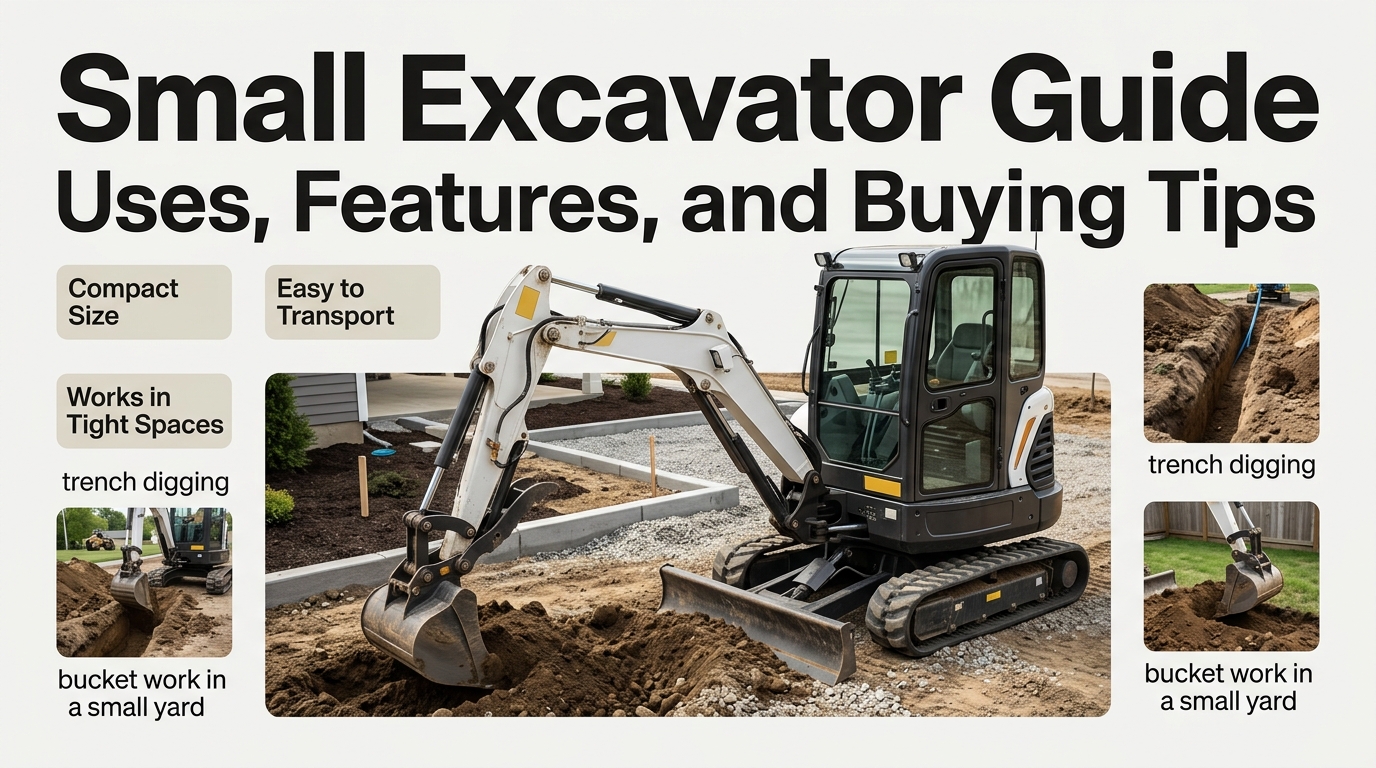
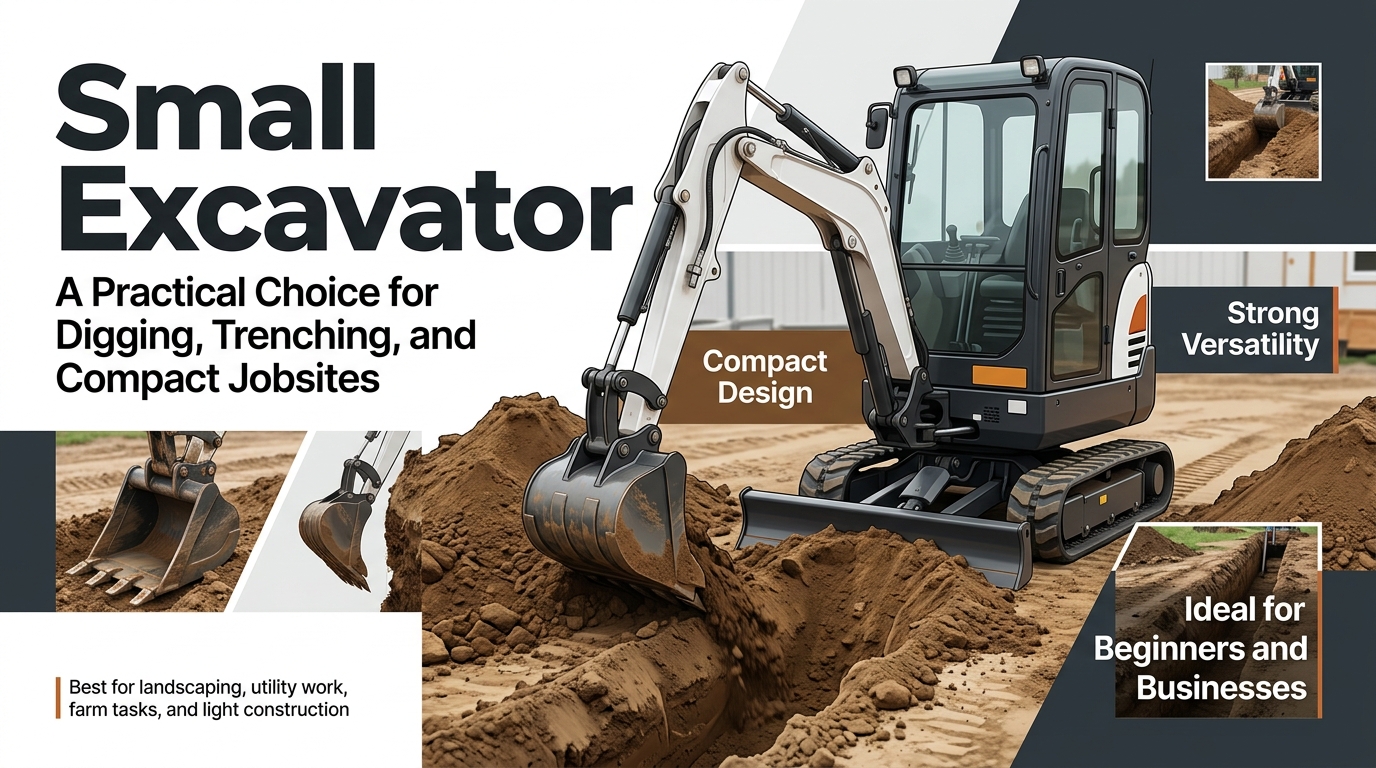
A small excavator is a compact digging machine made for jobs where a full-size excavator is too large, too heavy, or too hard to move around. It is often used for trenching, landscaping, small construction work, farm jobs, utility repair, and property maintenance.
For a beginner buyer or operator, the main value of a small excavator is simple: it can dig, lift, grade, and work in narrow areas without taking up too much space. But not every small excavator is the same. Size, digging depth, hydraulic power, attachments, and transport weight all matter when choosing the right machine.
This guide explains what a small excavator does, where it works best, and what to check before buying or using one.
What Is a Small Excavator?
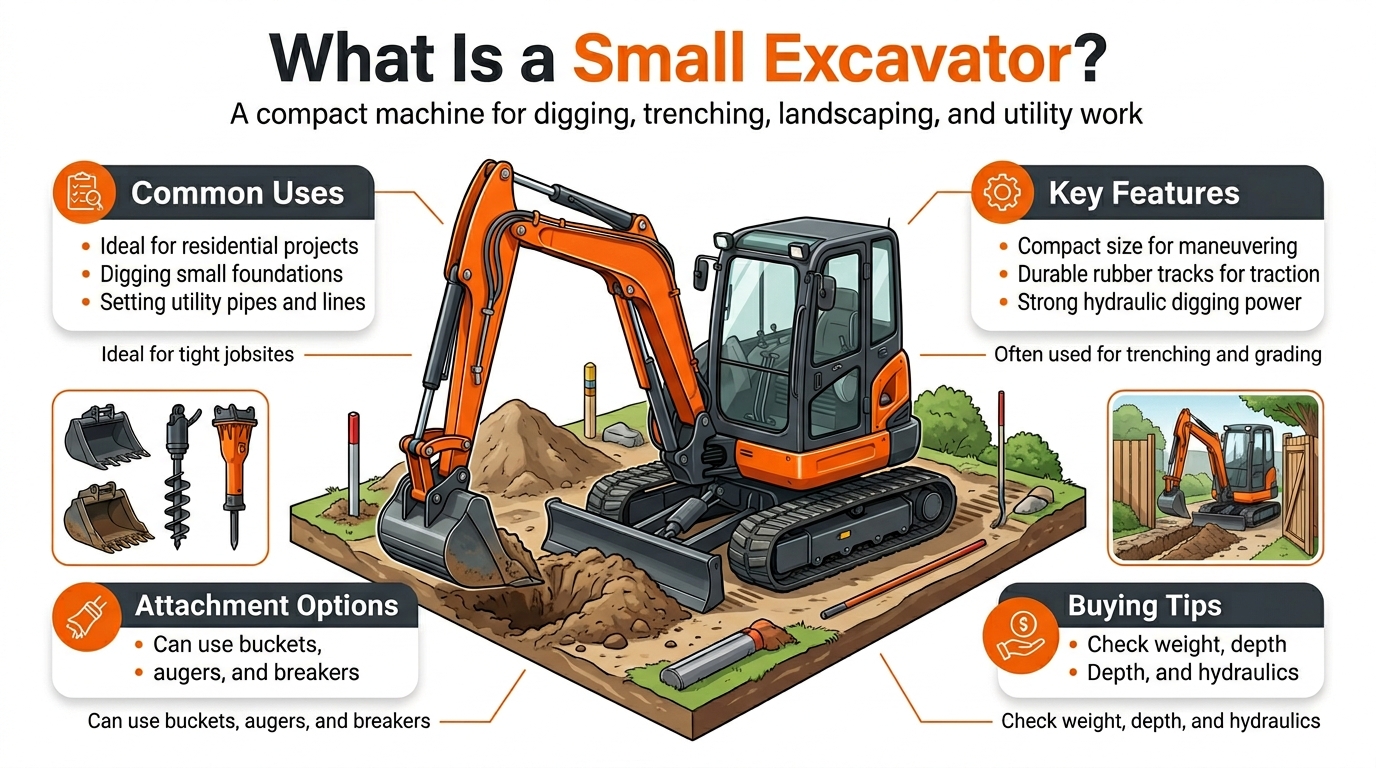
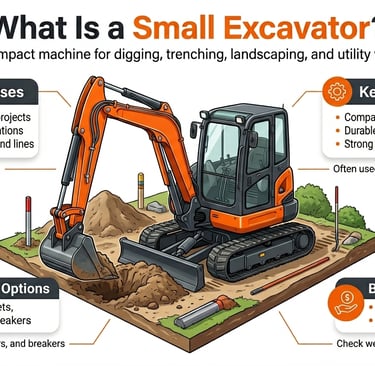
A small excavator is a compact version of a standard excavator. It usually has a tracked undercarriage, a boom, an arm, a bucket, and a rotating upper body. Many models are also called mini excavators or compact excavators.
The main difference is size. A small excavator is built for light to medium-duty work. It can fit into tighter spaces, move across smaller sites, and reduce damage to finished ground compared with larger machines.
Most small excavators are used for jobs such as:
Digging trenches for pipes, cables, or drainage
Removing soil, rocks, roots, or old concrete
Grading small areas
Cleaning ditches
Working around houses, gardens, farms, and small construction sites
Handling attachments like breakers, augers, grapples, and grading buckets
A small machine will not replace a large excavator on heavy earthmoving jobs. But for many daily tasks, it is easier to transport, easier to operate, and more practical.
Common Jobs a Small Excavator Can Handle
A small excavator is useful because it can do more than simple digging. With the right bucket or attachment, it can handle many jobs on one site.
For landscaping, it can dig ponds, shape soil, remove tree stumps, prepare garden beds, and install drainage lines. For construction, it can dig foundations, footings, utility trenches, and small basements. On farms, it can help with fence posts, irrigation lines, ditch cleaning, and general land maintenance.
It is also common in rental fleets because many contractors and property owners only need a compact machine for short jobs. A small excavator can often be moved with a trailer, depending on the machine weight and local transport rules.
For operators, the biggest advantage is control. The machine can work close to walls, fences, trees, and buildings with less risk than a larger excavator. That makes it useful for repair work and small projects where space is limited.
Why Small Excavators Are Useful on Tight Jobsites
Space is one of the main reasons buyers choose a small excavator. A large machine may have more power, but it can be hard to move around narrow paths, small yards, or indoor demolition areas.
A small excavator is easier to use in areas such as:
Residential backyards
Narrow driveways
Small building sites
Roadside repair areas
Gardens and landscape projects
Utility work near walls or fences
Farms with tight access paths
Some small excavators come with zero tail swing or reduced tail swing. This means the rear of the machine stays closer to the tracks when the upper body rotates. That is helpful when working near structures, traffic, or other machines.
Another useful feature is retractable tracks. Some compact models can narrow the track width to pass through gates or tight openings, then expand again for better stability while digging.
These small details matter in real work. A machine that can reach the job area easily will save time before the digging even starts.
Key Features to Check Before Choosing One
Before choosing a small excavator, look past the machine size and check the features that affect daily work.
Operating weight is one of the first things to check. It affects transport, ground pressure, stability, and what trailer or truck may be needed. A lighter machine is easier to move, but a heavier one may feel more stable when digging or lifting.
Digging depth tells you how deep the machine can dig. If the work includes drainage, pipe installation, or foundation jobs, make sure the excavator can reach the required depth without struggling.
Engine power and hydraulic flow affect how well the machine handles tough soil and attachments. If you plan to use a breaker, auger, or grapple, hydraulic performance becomes more important.
Cab comfort also matters if the machine will be used often. A clear view, smooth controls, adjustable seat, good ventilation, and easy entry can make long workdays safer and less tiring.
Track type is another point to consider. Rubber tracks are common for finished surfaces, pavement, and residential work because they reduce surface damage. Steel tracks are stronger for rough ground, but they can be harder on concrete and lawns.
A good small excavator should match the job, not just look powerful on paper.
Small Excavator Attachments and What They Do
Attachments make a small excavator more useful. A standard digging bucket is only one part of the machine’s value.
A trenching bucket is narrow and made for digging clean trenches for pipes, cables, or irrigation lines. A grading bucket is wider and better for leveling soil, shaping slopes, and finishing surfaces. A hydraulic breaker can break concrete, rocks, and old pavement. An auger can drill holes for fence posts, trees, signs, or small foundations.
Other useful attachments include grapples for handling brush or debris, rippers for hard ground, and tilt buckets for more accurate shaping work.
Before buying attachments, check the machine’s hydraulic flow, coupler type, weight limit, and attachment size. Not every attachment fits every small excavator. A heavy attachment on a light machine can reduce stability and make the work unsafe.
The best setup depends on the main job. A landscaping business may need grading buckets and augers. A utility contractor may need trenching buckets and breakers. A farm owner may want a simple bucket, thumb, and auger setup.
How to Choose the Right Small Excavator
The right small excavator depends on the work it needs to do most often. Buying only by size or price can lead to problems later.
Start with the job type. If most work is trenching, check digging depth and bucket options. If the machine will be used for landscaping, look at track width, ground pressure, and grading control. If the work includes demolition or hard material, check hydraulic power and breaker compatibility.
Next, think about access. Measure gates, paths, and tight areas before choosing the machine. A compact excavator that cannot reach the work area is not useful, even if it has good power.
Transport is also important. Check machine weight, trailer capacity, local transport rules, and loading height. Some buyers choose a smaller machine because it is easier and cheaper to move between jobs.
Also consider service access. Daily checks should be simple. Engine oil, coolant, hydraulic oil, filters, grease points, and track tension should be easy to inspect. A machine that is hard to service often gets neglected, which leads to more repair costs.
For business owners, the best choice is usually the machine that can handle most common jobs without being too large, too expensive, or too hard to transport.
Final Thoughts
A small excavator is a practical machine for digging, trenching, landscaping, utility work, and light construction. It is not made to replace a large excavator, but it can be the better choice when space, transport, and control matter.
Before choosing one, check the digging depth, machine weight, hydraulic power, attachments, track type, and service access. A good small excavator should fit the jobsite, the operator, and the type of work it will handle most often.
Explore our wide range of mini excavators for sale.
Company
© 2026. New Mini Excavator, All rights reserved.
Privacy Policy | Terms and Conditions
Follow us now
Support
For Inquiries
2522 S Malt Ave. Commerce, CA 90040
United States
Our Location
Tel:
+1-213-214-2203
+1 626-389-2472
Email:
-sales@typhonmachinery.com
-support@typhonmachinery.com