
Which Skid Steer Attachment Saves the Most Time?
A site owner rents a skid steer for a week of mixed work: moving pallets of blocks off a delivery truck, digging a row of fence-post holes, and clearing a corner lot choked with brush and broken limbs.
SKID STEER LOADERS
7/27/20269 min read
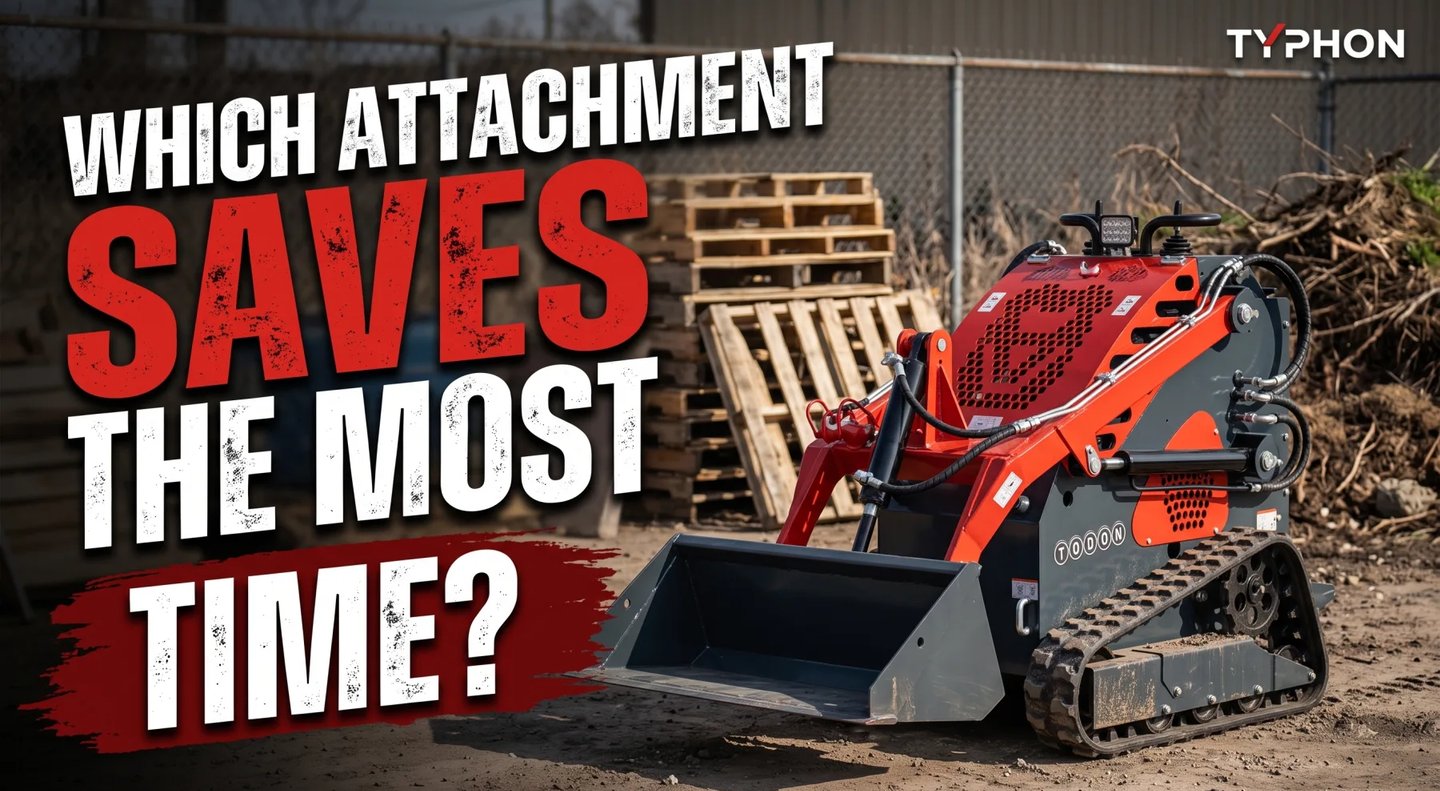
A site owner rents a skid steer for a week of mixed work: moving pallets of blocks off a delivery truck, digging a row of fence-post holes, and clearing a corner lot choked with brush and broken limbs. He picks up the machine with only a general-purpose bucket, figuring it can muscle through everything. By Wednesday he's tipping pallets off the truck with the bucket edge and scattering half of them, hand-digging post holes with a shovel because scooping them took too long, and dragging brush by hand into a pile that a grapple would have cleared in an hour. Three days of hard labor later, the work still isn't done, and the crew's payroll has doubled on tasks the right attachments would have finished by lunch. The machine was never the problem. The empty attachment rack was.
That gap between owning a skid steer and being ready to use it fast is where operators quietly lose the most time. This equipment is one of the most versatile machines on any site, but the machine alone doesn't save you hours. The attachment on the front does. Swap the right tool onto the coupler and a job that took a full crew a full day shrinks to a single operator and a fraction of the time. Bolt on the wrong one, or none at all, and you're doing skilled machine work with your back and a shovel. This post breaks down which attachments deliver the biggest time savings and when each one earns its place: the bucket and its everyday versatility, the auger that turns drilling into minutes, the pallet forks that make material handling effortless, the grapple that transforms debris and land clearing, and how to match the tool to the job so the machine actually saves the hours it should.
The Bucket: The Everyday Time-Saver You Already Own
The bucket is the attachment most skid steers wear straight off the trailer, and it's easy to overlook precisely because it's so common. Yet on the widest range of daily tasks, it saves more cumulative time than any specialty tool. Understanding what it does best keeps you from reaching for something fancier when the bucket already wins.
Why the Bucket Handles So Much Work
A general-purpose bucket digs, scoops, carries, backfills, grades, and levels, all with a single tool that never leaves the machine. That range is exactly why it saves so much time across a typical day, since you move from loading soil to backfilling a trench to spreading gravel without stopping to swap tools. Fewer changes mean more minutes spent working.
The bucket shines most on loose material and rough grading. Moving stockpiles, loading trucks, spreading base, and cleaning up a site are jobs it finishes in a fraction of the time a crew with shovels would need. For the bulk of everyday earthmoving, digging into skid steer bucket efficiency shows the bucket is the fastest tool you already own.
Specialty Buckets That Speed Specific Jobs
Beyond the standard bucket, specialized versions target particular tasks and shave even more time. A low-profile bucket digs and loads faster in tight cuts, a grading bucket levels surfaces in fewer passes, and a 4-in-1 bucket digs, doses, grabs, and grades without a single swap.
The 4-in-1 is the standout time-saver here. Its clamshell design lets one bucket act like several attachments, so an operator grades a pad, grabs a chunk of debris, and backfills a trench without leaving the seat. On mixed jobs where you'd otherwise stop to change tools repeatedly, that versatility saves real time every hour.
When the Bucket Slows You Down
The bucket earns its keep on loose material and grading, but it becomes the slow choice the moment a job calls for precision or a different action entirely. Forcing a bucket to lift pallets, dig neat holes, or grab brush wastes far more time than swapping to the proper tool would cost.
Recognize those moments early. When you catch yourself fighting the bucket to do a job it wasn't built for, that's the signal to change attachments rather than push through.
Takeaway:: the bucket is the fastest tool for digging, scooping, carrying, and grading loose material, and a 4-in-1 stretches that lead further, so treat it as your default time-saver but switch the instant the job calls for real precision or a different action.
The Auger: Turning Hours of Digging Into Minutes
Few attachments deliver a more dramatic time savings than the auger, because it replaces some of the slowest, most punishing hand labor on any site. Where a crew with post-hole diggers measures progress in hours, an auger measures it in minutes. Knowing when to reach for one is one of the easiest wins an owner can claim.
Where the Auger Saves the Most Time
An auger drills clean, consistent holes for fence posts, deck footings, sign bases, tree planting, and pier foundations, powering through soil in seconds that would take a worker many minutes by hand. On a job with dozens of holes, the difference isn't incremental, it's the gap between a full day of backbreaking work and a couple of easy hours.
The savings compound with volume. A single post hole by hand is tedious; forty of them is a lost day, while the same forty with an auger is a short morning. Exploring auger attachment time savings across a fencing or planting job makes the case instantly, since the tool pays for its swap the moment the second hole is done.
Matching Auger Bits to the Job
An auger's speed depends on running the right bit for the hole and the ground. Bit diameter sets the hole size, so match it to your posts or footings, and bit length determines how deep you can drill in a single pass. Using the correct bit means cleaning holes the first time rather than reworking undersized or shallow ones.
Ground conditions matter just as much. Standard bits handle typical soil quickly, while rocky or frozen ground calls for a heavy-duty or rock bit that keeps drilling instead of stalling. Checking that your auxiliary hydraulic flow suits the auger head ensures it spins with full power rather than laboring, so the tool drills at the speed it was built for.
Avoiding Common Auger Time-Wasters
The auger only saves time when it's set up right, and a few missteps quietly erase its advantage. Forcing the bit down too fast packs soil and stalls the drill, while the wrong bit for hard ground turns a quick hole into a struggle. Let the auger pull itself down at its own pace instead of pushing it.
Watch for buried obstacles, too, since hitting a rock or root at speed jams a bit and costs you the time you saved. Clearing the drill spot and easing into hard ground keeps the auger cutting cleanly.
Takeaway:: the auger delivers one of the largest time savings of any attachment on hole-heavy jobs, so match the bit to the hole and the ground, confirm your hydraulic flow, and let it drill at its own pace to keep every hole fast.
Pallet Forks and Grapples: Handling and Clearing Without the Crew
Two attachments quietly replace the most labor-intensive crew work on a site: moving heavy material and clearing debris. Pallet forks and grapples each turn tasks that once demanded several sets of hands into a one-operator job. Recognizing where they save time reshapes how you staff and schedule the work.
Pallet Forks for Fast Material Handling
Pallet forks turn a skid steer into a nimble rough-terrain forklift, lifting and moving pallets of block, bags of mix, bundles of lumber, and boxed materials that a crew would otherwise carry by hand. Unloading a delivery truck that would take four workers an hour drops to one operator and a few minutes with forks on the coupler.
The time savings run all day on a material-heavy site. Moving supplies from a staging area to the work zone, restocking a crew, and loading and unloading all happen fast and safely with forks rather than by hand. Looking into pallet fork material handling shows how much labor disappears when the machine carries the weight instead of the crew.
Grapples for Debris and Land Clearing
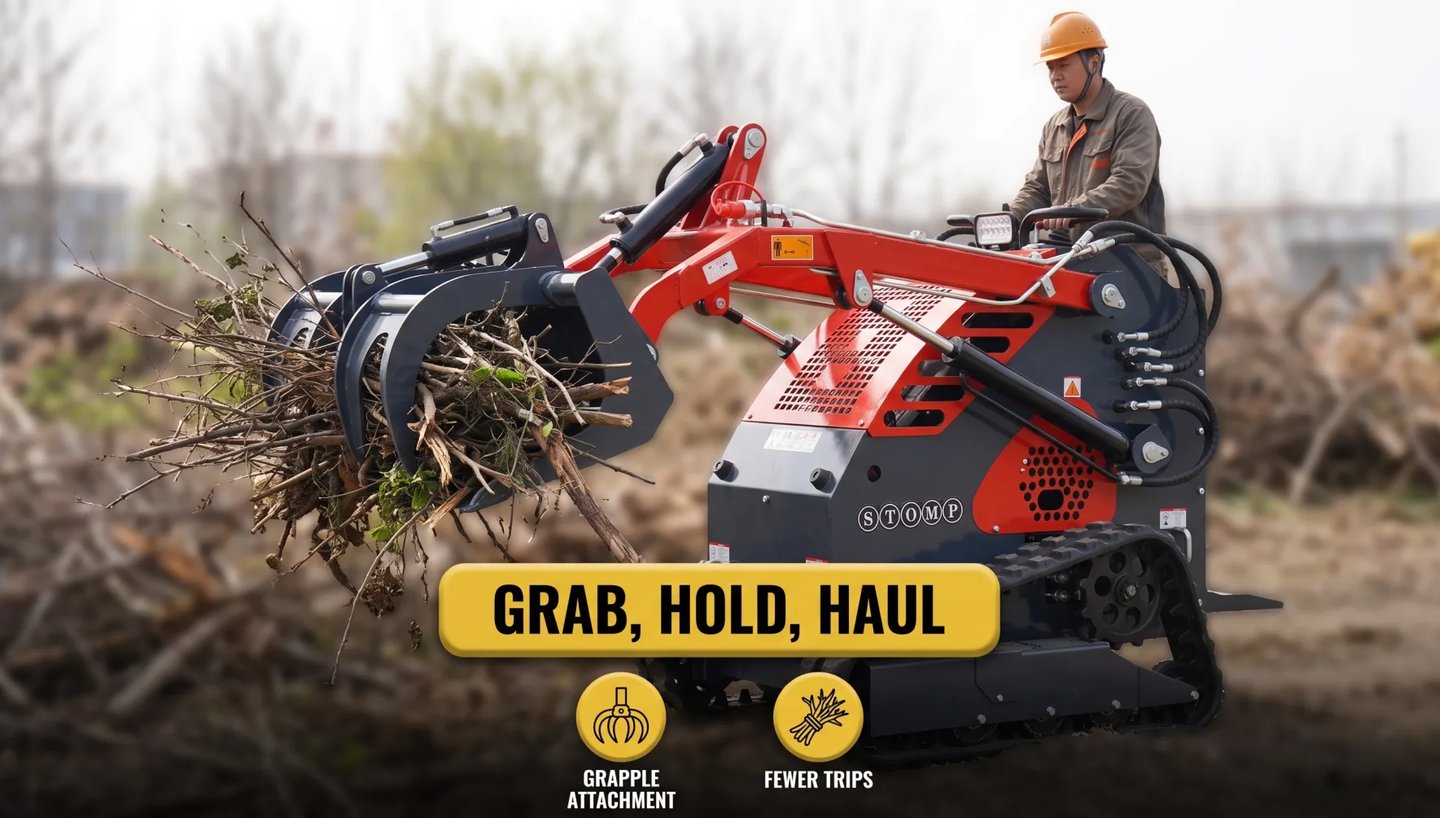
A grapple is the tool that transforms clearing and cleanup, since its hydraulic jaws grab, hold, and carry irregular loads a bucket can only push around. Brush, branches, logs, rocks, demolition debris, and scrap all get grabbed and moved in far fewer trips, so a lot that would take a crew a day to clear by hand clears in a fraction of the time.
The savings come from control. Because the grapple clamps a load securely, an operator carries a full armful of brush or a heavy log in one trip instead of the many a bucket would need to nudge the same pile along. Understanding grapple attachment efficiency on cleanup and land-clearing work reveals why it's often the single biggest time-saver on debris-heavy jobs.
Choosing Between Handling and Clearing Tools
Forks and grapples save time on different work, so match the tool to what you're moving. Reach for pallet forks when material is stacked, bundled, or palletized and needs lifting and placing cleanly, and reach for a grapple when the load is loose, irregular, or tangled and needs grabbing and holding.
Some sites need both across a single project, from unloading palletized supplies at the start to clearing debris at the end. Planning which tool each phase demands keeps the machine productive rather than forcing one attachment into work the other does faster.
Takeaway:: pallet forks make material handling a one-operator job while grapples turn debris and land clearing into fast, controlled work, so match forks to stacked loads and grapples to loose or tangled ones to replace hours of crew labor.
Matching the Attachment to the Job for Maximum Time Savings
The biggest time savings don't come from owning the flashiest attachment, but from putting the right tool on the machine for the task in front of you. A deliberate match turns the skid steer into the fastest way to finish nearly any job. Getting that decision right, and setting up the swaps, is where an owner truly reclaims hours.
Let the Task Name the Tool
Start every job by naming the primary task, then choose the attachment built for it. Digging and grading loose material calls for a bucket, drilling holes calls for an auger, lifting stacked or palletized loads calls for forks, and grabbing loose debris calls for a grapple. Naming the task first prevents the classic mistake of forcing whatever's already mounted to do work it's slow at.
Think in terms of the action the job requires. Scooping, drilling, lifting, and grabbing are four different actions, and each has a tool that performs it in a fraction of the time the others would. Match the action to the attachment, and the machine works at its fastest instead of fighting the task.
Make Attachment Swaps Fast and Frequent
The time an attachment saves only counts if changing to it is quick, so a quick-attach coupler is the feature that unlocks every other saving. A universal quick-attach plate lets an operator drop one tool and lock on another in under a minute without leaving the cab, which means swapping mid-job costs almost nothing.
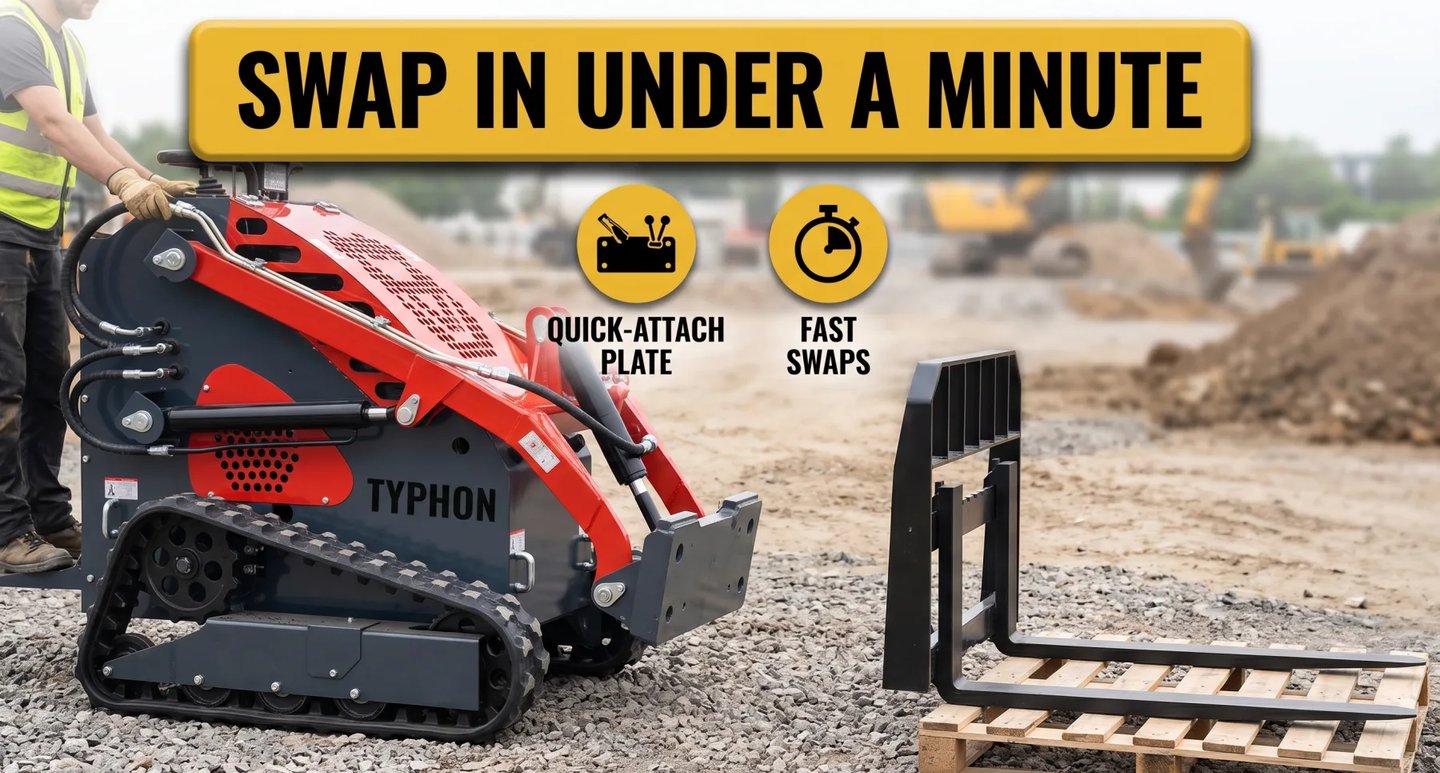
That speed changes how you work. When a swap takes seconds, you stop forcing the wrong tool through a task and start using the right one for each phase, whether that's forks to unload, an auger to drill, and a grapple to clear all in one visit. Confirming quick coupler compatibility across your attachments keeps every change fast and every tool ready.
Match Hydraulics and Capacity to the Attachment
Powered attachments like augers and grapples only save time when the machine supplies the flow and pressure to run them fully, so confirm your skid steer's auxiliary hydraulic output matches each tool before the job. An underpowered attachment labors and stalls, giving back the very time it should save.
Weight and capacity matter for the machine's rating, too. Match the attachment and its load to your skid steer's rated operating capacity so it lifts and works safely at full speed rather than straining. Matching hydraulics and capacity to each tool means every attachment performs at its rated pace, delivering the full time savings it promises.
Takeaway:: let the task name the tool, keep swaps fast with a quick-attach coupler, and match hydraulics and capacity to each attachment, because the biggest time savings come from putting the right, fully powered tool on the machine for every phase of the work.
Frequently Asked Questions
Which single skid steer attachment saves the most time?
It depends on your most common slow task. An auger turns hours of hand digging into a short morning on hole-heavy jobs, pallet forks replace an entire crew's carrying on material-heavy sites, and a grapple wins on debris and land clearing. For everyday mixed work, a 4-in-1 bucket saves the most cumulative time by handling several actions without a single swap.
Do I need special hydraulics to run skid steer attachments?
Some attachments do. Simple tools like a bucket and pallet forks work off the machine's standard functions, but powered attachments such as augers and grapples need an auxiliary hydraulic circuit with enough flow and pressure to run at full speed. Before using one, confirm your skid steer's auxiliary hydraulic output matches the attachment's requirement, because an underpowered tool labors, stalls, and gives back the time it should save. Matching flow and pressure keeps every powered attachment working at its rated pace.
Conclusion
The attachment that saves the most time is always the one matched to your slowest, most labor-heavy task. A versatile bucket handles everyday digging and grading, a 4-in-1 stretches that further across mixed work, an auger turns a day of post-hole digging into a short morning, pallet forks replace a crew's carrying, and a grapple makes debris clearing fast and controlled. Name the primary action each task requires, put the right tool on the machine for that phase, keep swaps fast with a quick-attach coupler, and confirm your hydraulics match every powered attachment. Get that match right, and your skid steer becomes the fastest way to finish nearly any job on site. When you're ready to build out the right attachment set, reach out to a trusted equipment specialist who can pair reliable tools with the results your projects depend on.
Explore our wide range of mini excavators for sale.
Company
© 2026. New Mini Excavator, All rights reserved.

Privacy Policy | Terms and Conditions
Follow us now
Support
For Inquiries
2522 S Malt Ave. Commerce, CA 90040
United States
Our Location
Tel:
+1-213-214-2203
+1 626-389-2472
Email:
-sales@typhonmachinery.com
-support@typhonmachinery.com